
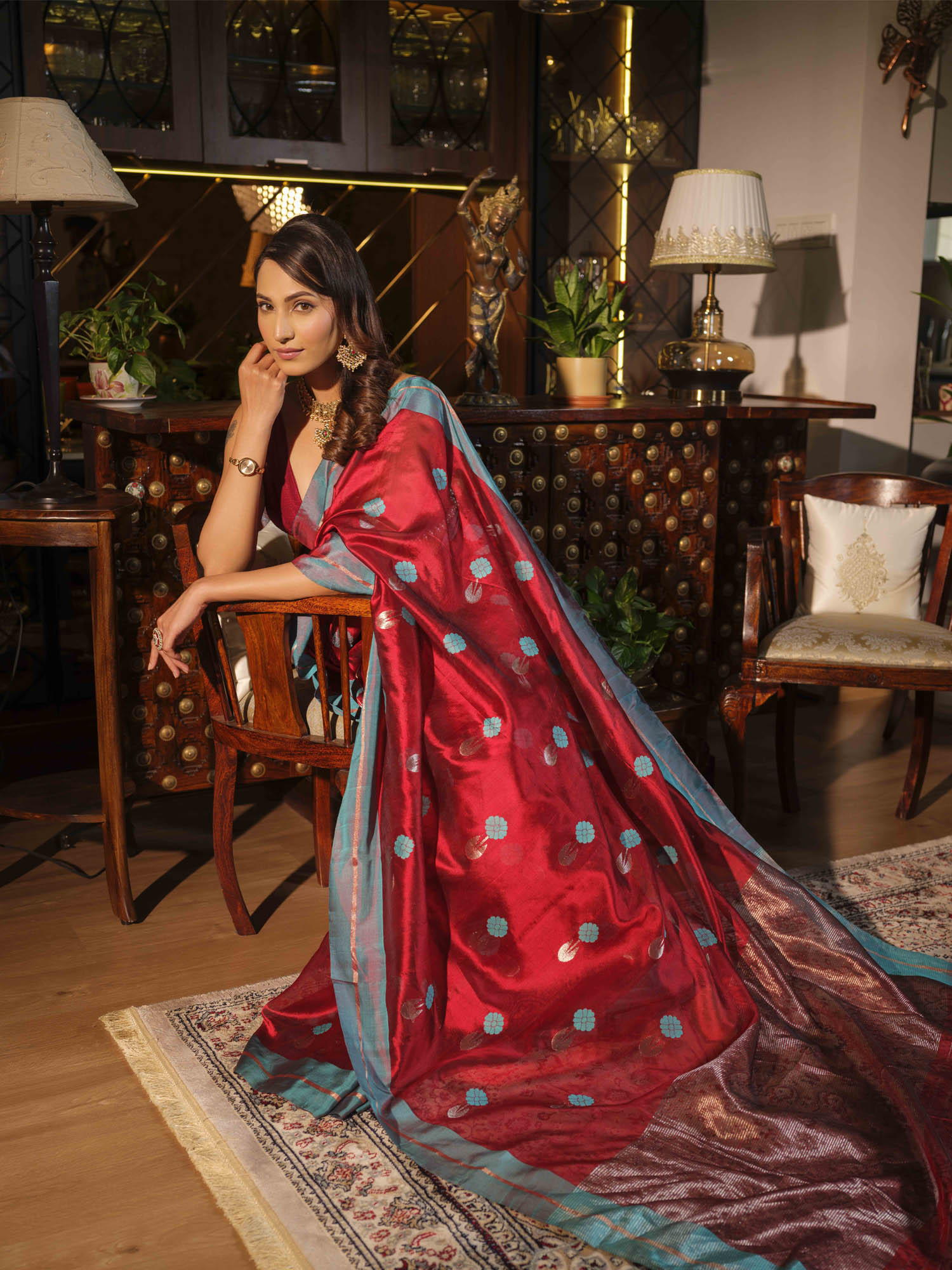
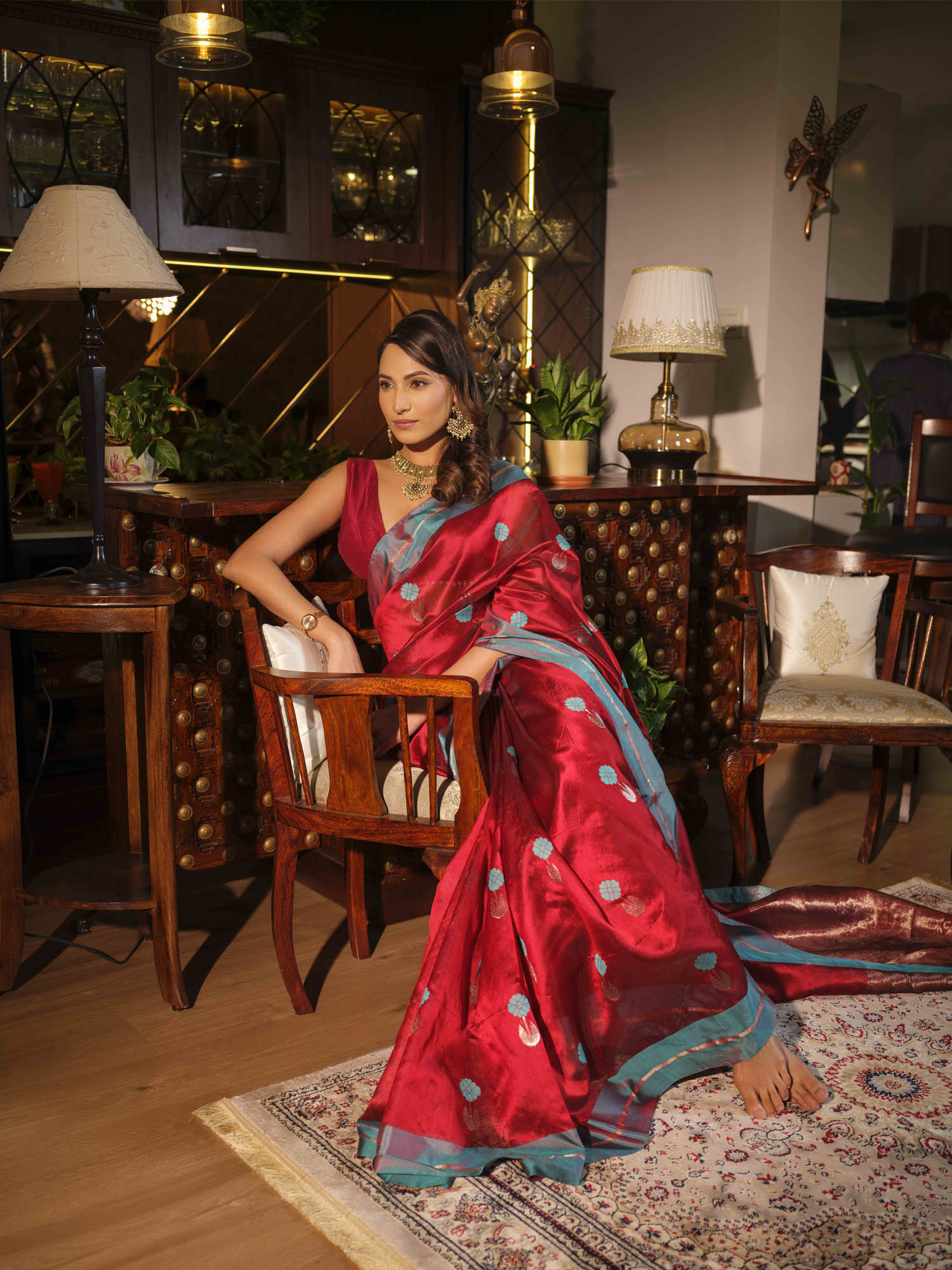
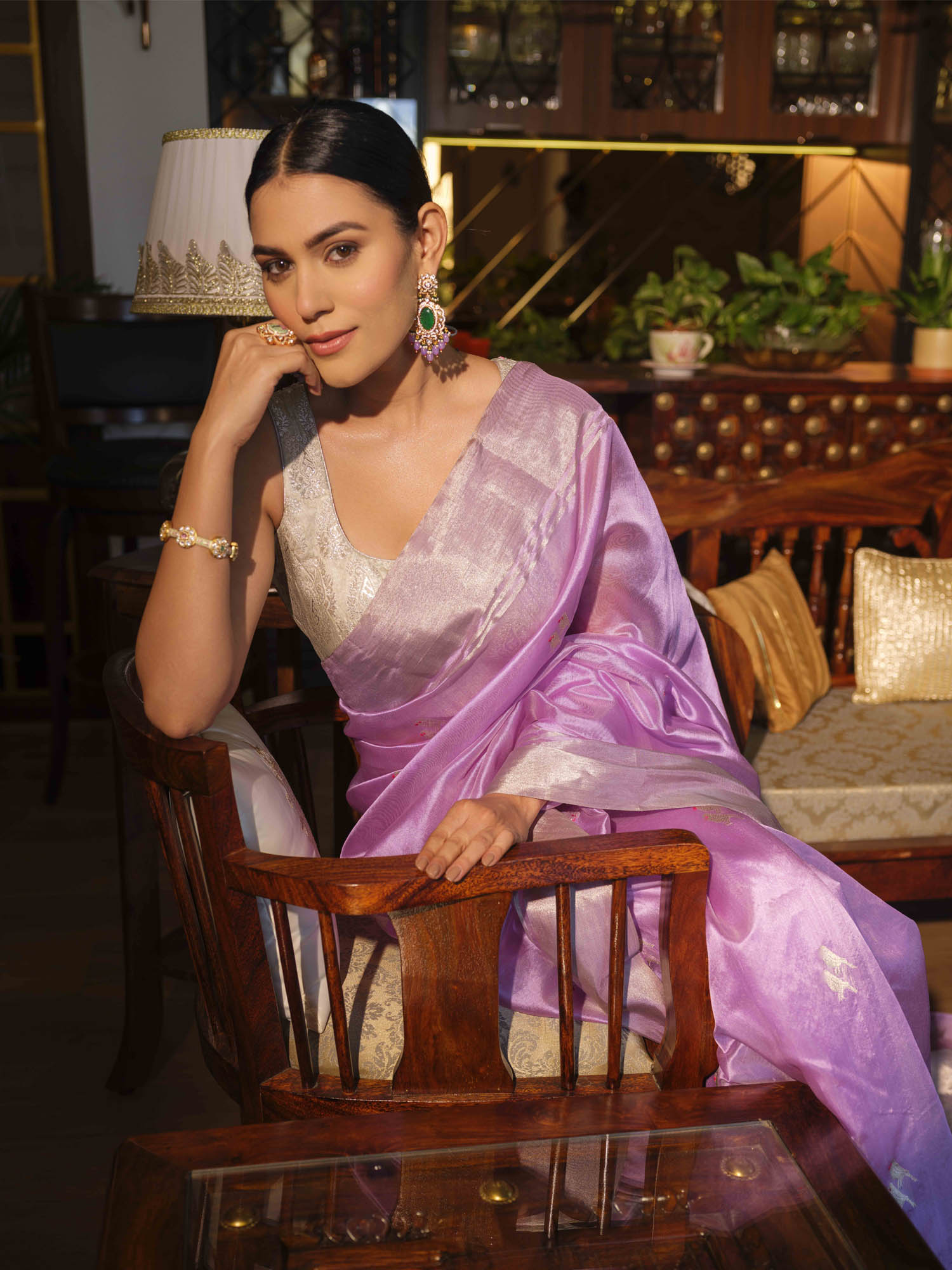
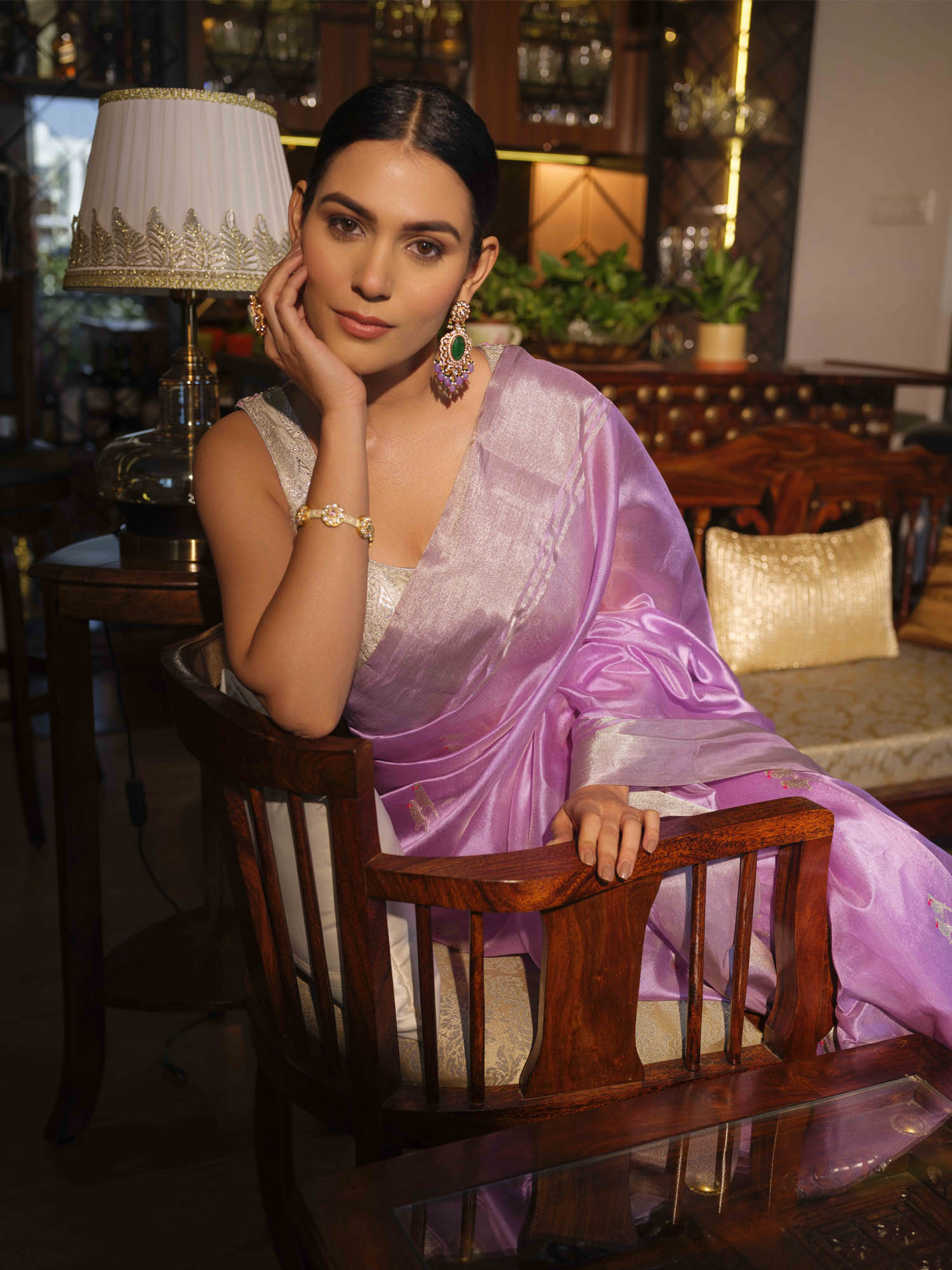


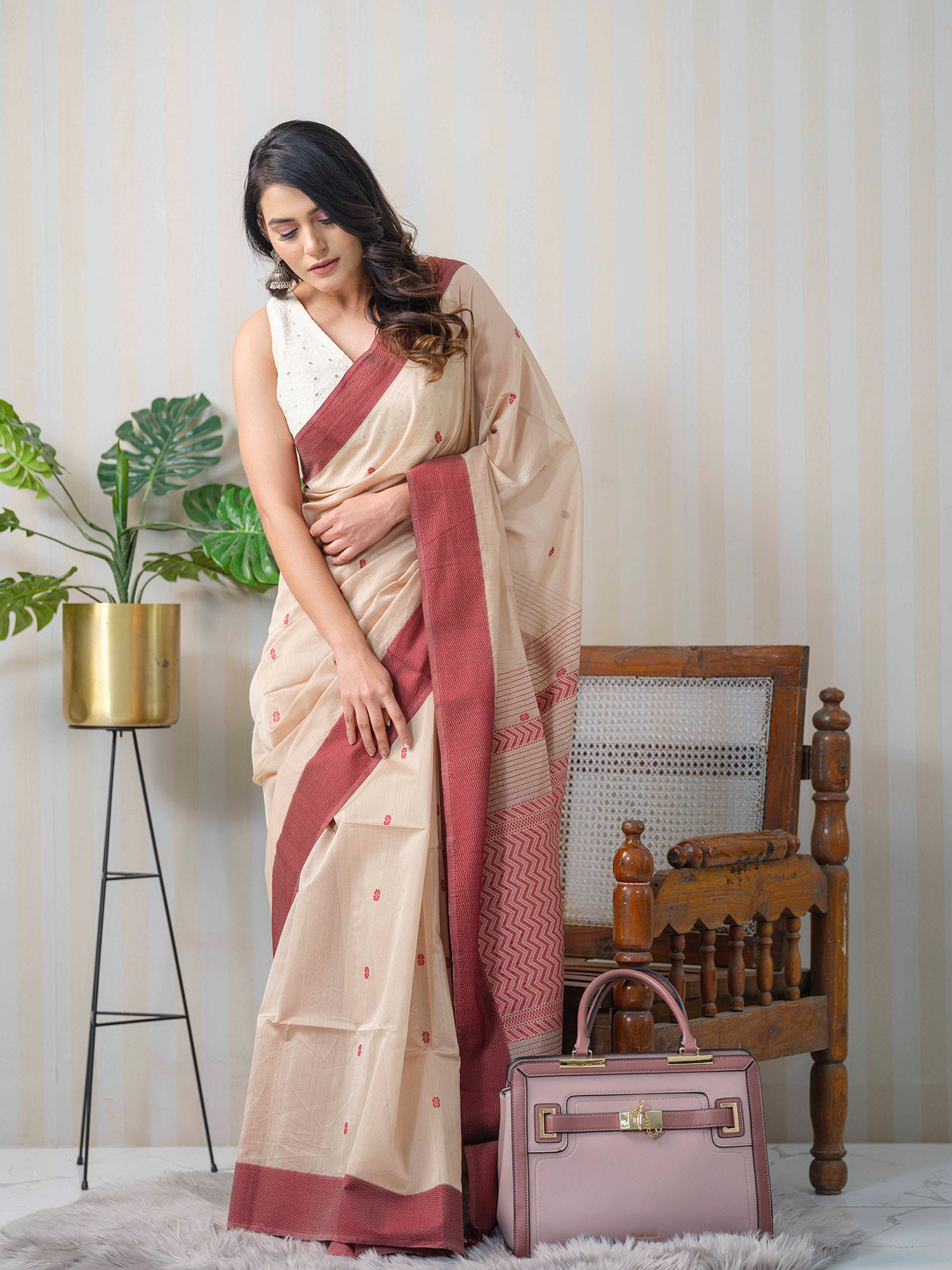
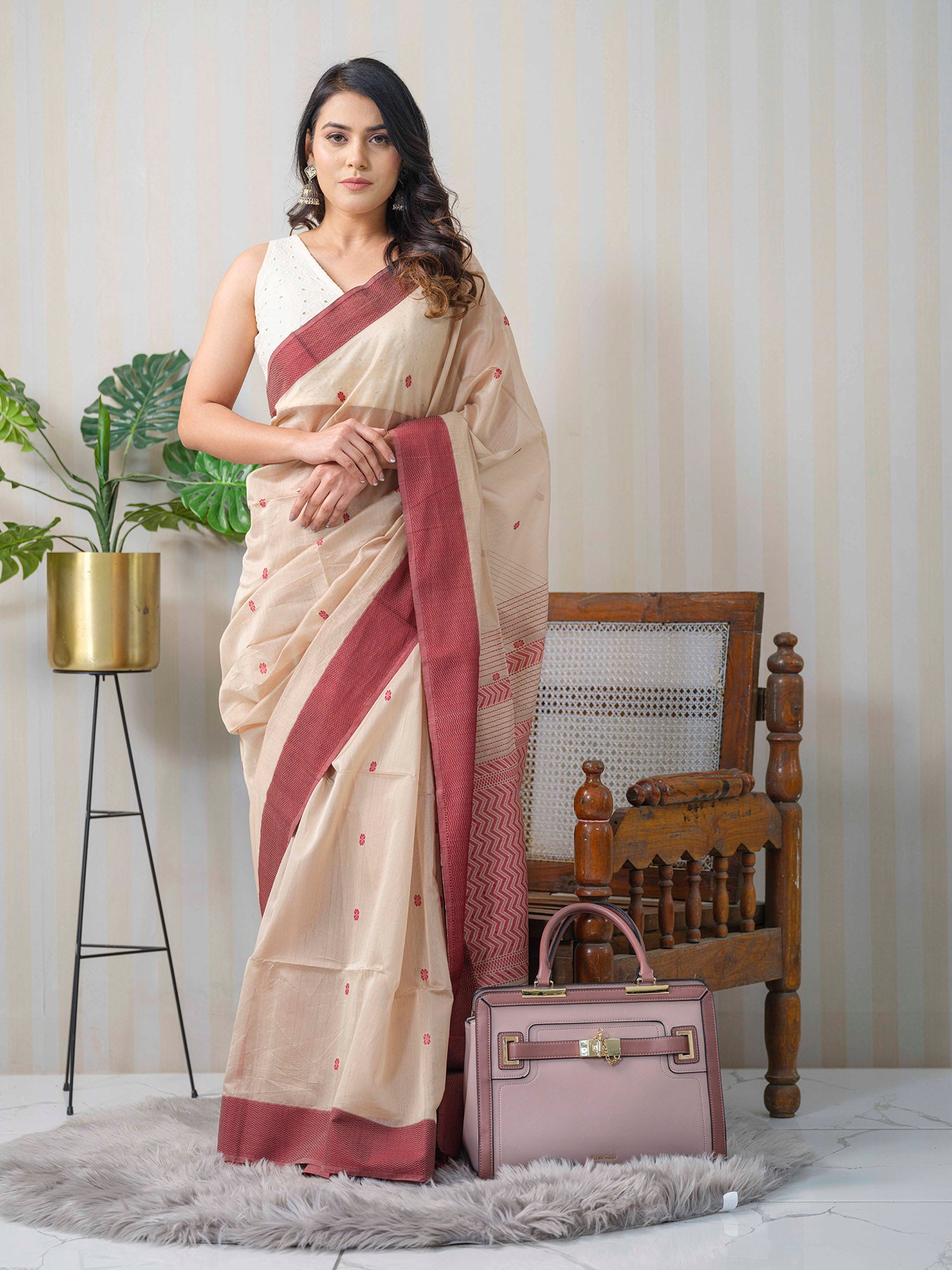
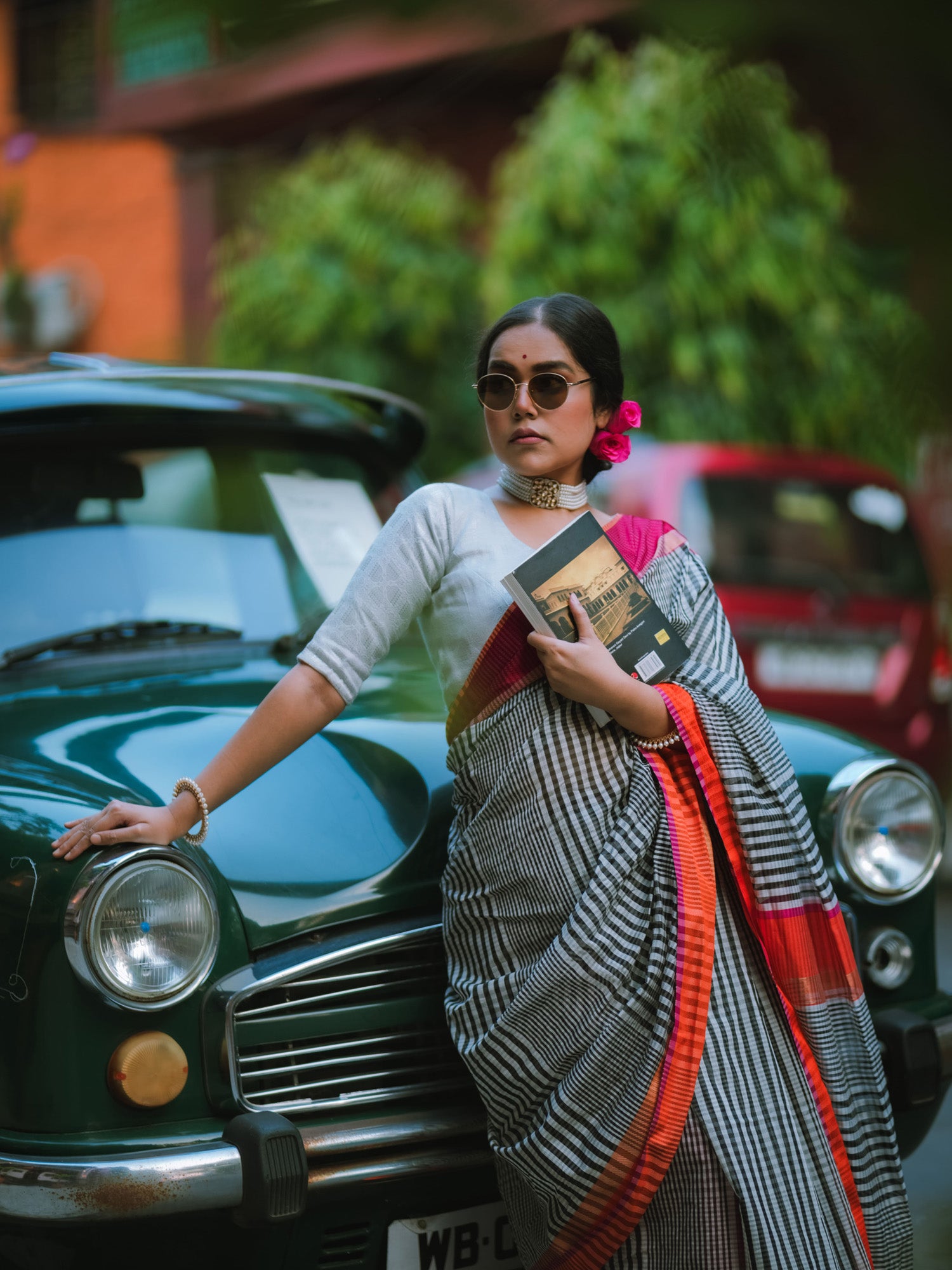
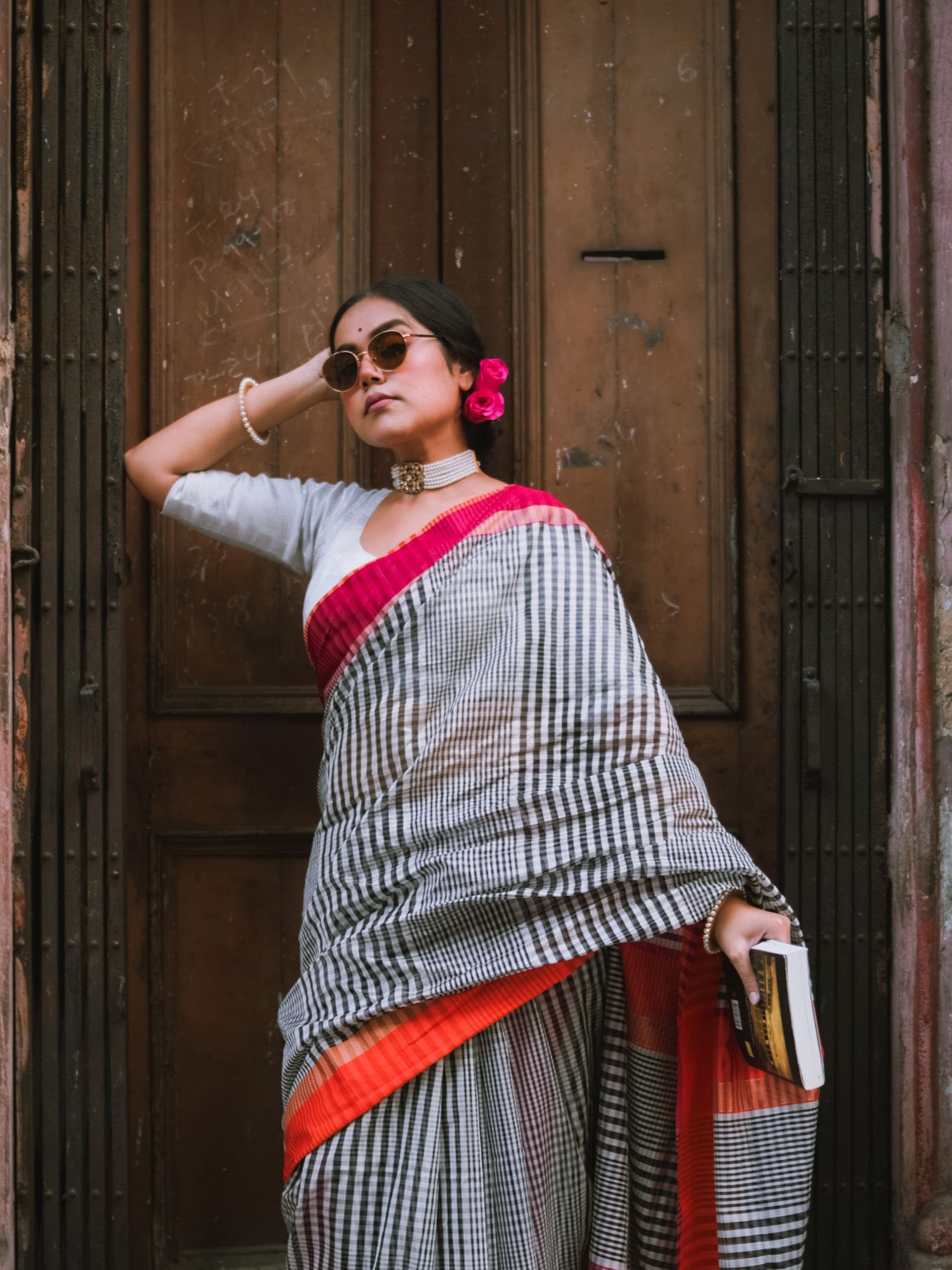


There is something deeply comforting about flowers that bloom where they always have.
The hibiscus that greets you every morning. The champa tree that perfumes the courtyard before sunrise. The bougainvillaea that quietly climbs an old wall, season after season. They ask for very little, yet become part of the memories we carry.
At Mrida, those familiar blooms found a new home - not in a vase or a garden, but on a handwoven saree.
A hand painted floral saree is more than a beautiful garment. It is the meeting point of two timeless crafts: the patience of weaving and the artistry of painting. Long before a single flower is painted, the story begins with threads on a loom, guided by skilled hands that have preserved India's textile heritage for generations.
Understanding this journey reveals why every handcrafted saree carries something that no machine-made fabric can replicate. Today, more women are choosing artisan hand painted sarees that celebrate individuality, craftsmanship, and timeless style.
Discover our From My Garden: Hand painted Floral Sarees Collection.
Why Handloom is the Foundation of Every Hand painted Floral Saree
Before colours, before brushstrokes, and before floral motifs, there is the loom.
Every handcrafted saree starts with weaving - a process that transforms yarn into fabric through rhythm, precision, and years of inherited skill. This is what makes Indian handloom sarees so enduring and distinctive. Unlike mass-produced textiles, handloom weaving is shaped by the artisan's pace, where every thread is carefully interlaced to create a fabric that is both durable and expressive.
For From My Garden, Mrida chose Mangalgiri Silk by Cotton, a fabric that reflects centuries of weaving tradition from Andhra Pradesh.
Known for its lightweight feel, subtle sheen, and breathable comfort, Mangalgiri Silk by Cotton provides the ideal canvas for hand painting. The fabric has enough structure to hold detailed brushwork while allowing colours to settle naturally into its fibres, creating depth that printed textiles often cannot achieve.
Explore our complete Mangalgiri Silk by Cotton Sarees to discover the handwoven fabric behind every hand painted floral saree..
Every saree, therefore, begins not with design, but with craftsmanship.
To learn more about the rich weaving heritage, breathable comfort, and enduring appeal of this remarkable fabric, explore our article Why Mangalgiri Silk Sarees Remain a Timeless Choice for Modern Women.
Why Handloom Matters Before the Painting Begins
When people admire a hand painted saree, the artwork often captures their attention first.
Yet the quality of the painting depends just as much on the fabric beneath it.
A carefully woven handloom saree offers a unique texture that interacts beautifully with pigments. The weave allows colours to be absorbed gradually, giving painted flowers a softer, more organic appearance rather than the flat finish commonly associated with digital printing.
This relationship between fabric and paint is what makes hand painted handloom sarees so distinctive. Neither craft exists independently. The beauty of one depends entirely on the other.
It is this harmony that gives every saree its character.
The Art of Painting by Hand
Once the fabric is woven, another artisan begins their work.
Unlike printed floral sarees, where every motif is reproduced identically, hand painting is an entirely manual process. Each flower is painted individually using brushes, pigments, and careful observation.
The artist studies the shape of petals, the movement of leaves, the way colours blend naturally, and the subtle imperfections that make flowers feel alive.
No stencil dictates every stroke.
No machine repeats the same pattern.
Every brush movement responds to the fabric beneath it, making each saree slightly different from the next.
This is why no two hand painted floral sarees are ever exactly alike.
The individuality of the artisan remains visible in every bloom.
If you'd like to explore the history, craftsmanship, and cultural significance behind this timeless art form, read our guide on The Art of Hand painted Floral Sarees: A Guide to India's Most Beautiful Wearable Craft, where we take a closer look at the techniques, heritage, and artistry that make every hand painted saree unique.
Why Modern Women Choose Hand painted Floral Sarees
Fashion today is becoming more intentional. Instead of following fast-changing trends, many women are choosing pieces that reflect their personality, celebrate craftsmanship, and hold lasting value. This is one of the reasons hand painted floral sarees have become a favourite among those seeking modern sarees that feel both meaningful and timeless.
Every hand painted saree is unique. These handcrafted floral sarees become one-of-a-kind expressions of the artisan's skill, making every piece truly personal. No two brushstrokes are ever identical, making each piece a one-of-a-kind work of wearable art. Unlike mass-produced designs, artisan-made sarees carry the individuality of the artist who painted them, giving every saree its own story and character.
Beyond their beauty, hand painted sarees also align with the growing appreciation for thoughtful, slow fashion. Created through skilled craftsmanship and designed to be treasured for years, they offer an alternative to disposable trends while supporting traditional artisan communities.
Their versatility is another reason they continue to resonate with modern wardrobes. Whether paired with heirloom jewellery for a wedding, styled minimally for a cultural event, or worn at an intimate celebration, contemporary sarees with floral artwork effortlessly adapt to every occasion.
Collections like Mrida's From My Garden – The Bloom Edit embody this philosophy by bringing together handwoven Mangalgiri Silk by Cotton, delicate botanical art, and timeless design, creating floral handloom sarees that feel rooted in heritage while speaking to the women of today.

Inspired by Gardens, Not Patterns
Many floral prints begin with repeating motifs created on a computer.
Hand painted floral sarees follow a different philosophy.
For From My Garden, inspiration came from quiet mornings spent observing real flowers: the crimson hibiscus opening to the first light, champa blossoms scattered across the courtyard, lotus flowers resting calmly on still water, and bougainvillaea climbing walls without ever asking for attention.
Rather than arranging flowers into perfect symmetry, the compositions follow nature itself.
Some blooms appear close together.
Others leave generous spaces.
Petals turn in different directions.
No flower mirrors another.
The result feels less like a pattern and more like a garden that continues to grow across the drape.
Hand Painted Floral Sarees vs Printed Floral Sarees
| Feature | Hand Painted Floral Sarees | Machine Printed Floral Sarees |
|---|---|---|
| Creation Process | Every floral motif is painted individually by skilled artisans. | Designs are printed mechanically using digital or screen-printing techniques. |
| Uniqueness | Every saree is one of a kind with natural variations in brushstrokes. | Every saree has the same repeated design and pattern. |
| Craftsmanship | Reflects traditional Indian artistry, patience, and hand craftsmanship. | Focuses on speed, consistency, and large-scale production. |
| Artistic Value | Considered wearable art with a personal artistic touch. | Decorative fashion with limited handcrafted character. |
| Time Required | Requires several hours or days depending on the artwork. | Produced quickly using automated printing processes. |
| Sustainability | Supports slow fashion, artisan livelihoods, and traditional crafts. | Often associated with mass production and fast fashion. |
| Exclusivity | Every saree is unique and cannot be replicated exactly. | Thousands of identical pieces can be produced. |
| Best For | Weddings, festive occasions, collectors, gifting, and heirloom wardrobes. | Everyday wear and budget-conscious fashion. |
At first glance, printed and hand painted floral sarees may look similar, but the craftsmanship behind them is very different.
Printed sarees are created using machines, where the same design is reproduced across multiple pieces. Every flower, colour, and pattern remains identical.
A hand painted floral saree is created one brushstroke at a time. Every flower is painted individually, allowing slight variations in colour, shape, and movement that make each saree truly unique. These differences are not imperfections; they are the mark of the artisan's hand.
When painted on a handloom fabric like Mangalgiri Silk by Cotton, the colours settle beautifully into the weave, giving the artwork a natural depth and softness that only handcrafted techniques can achieve. This is what transforms them into true wearable art sarees.
When Handloom Weaving Meets Hand painting
Handloom weaving takes time.
Hand painting takes time.
Neither process can be hurried without losing its essence.
When these crafts come together, they create something that carries the imprint of multiple artisans, each contributing their own expertise before the saree reaches the wearer.
The loom provides structure.
The brush brings personality.
Together, they create a saree that feels alive with a human touch.
In a world increasingly shaped by automation, this kind of craftsmanship feels both rare and meaningful.
The Story Behind Mrida's From My Garden Collection
Every saree in From My Garden began with a flower that already existed not in a design archive, but in a lived-in garden.
The collection celebrates blooms that quietly return every season: the bold confidence of Crimson Hibiscus, the gentle warmth of Golden Hibiscus, the quiet strength of Pink Lotus, the delicate elegance of Champa Blush, the untamed spirit of Bougainvillaea Wall, and the fresh optimism of Morning Bloom.
Each design is hand painted on Mangalgiri Silk by Cotton, bringing together India's weaving heritage and the timeless practice of hand painting.
The result is not simply a floral saree. It is one of Mrida's premium hand painted sarees, created to celebrate slow craftsmanship and timeless beauty.
It is a wearable memory of gardens, seasons, and craftsmanship.
Why Hand Painted Floral Sarees Continue to Matter
Fashion trends come and go.
Craft remains.
Choosing a hand painted floral saree means choosing something created slowly, thoughtfully, and intentionally. These luxury floral sarees celebrate craftsmanship over mass production while preserving traditions that cannot be replicated by machines.
It is also an invitation to wear something that carries a story.
Not because it is perfect.
But because it is unmistakably made by human hands.
Like the flowers that inspired it, every hand painted saree reminds us that the most beautiful things are rarely rushed.
They simply take the time they need to bloom.
Final Thoughts
Every hand painted floral saree begins long before the first brushstroke. It starts on the handloom, where skilled weavers create the fabric that becomes the canvas for an artisan's work.
With From My Garden, Mrida brings together the heritage of Mangalgiri Silk by Cotton and the artistry of hand painting to create sarees inspired by the quiet beauty of nature. Each piece is a celebration of slow craftsmanship, creating luxury handloom sarees that are made to be worn, cherished, and remembered.
Explore the complete From My Garden – Hand painted Floral Sarees Collection and discover artisan-made Mangalgiri Silk by Cotton sarees inspired by everyday blooms.
Explore our Hand Painted Floral Sarees and discover artisan-made designs inspired by everyday blooms.
Learn more about the artistry behind hand painted floral sarees.
Frequently Asked Questions (FAQs)
1. What is a hand painted floral saree?
A hand painted floral saree is a saree where every floral motif is painted individually by skilled artisans using brushes and fabric-safe pigments. Unlike printed sarees, each piece is unique, with subtle variations that reflect the artisan's craftsmanship.
2. What makes hand painted sarees different from printed floral sarees?
Printed floral sarees are machine-produced with identical patterns repeated across multiple fabrics. Hand painted sarees are created entirely by hand, making every flower, leaf, and brushstroke unique and giving each saree its own character.
3. Why is handloom fabric preferred for hand painting?
Handloom fabrics have a natural texture and fibre composition that absorb pigments beautifully. This allows colours to appear richer and gives the artwork greater depth compared to many machine-made fabrics.
4. What fabric is used in Mrida's From My Garden collection?
From My Garden is crafted on Mangalgiri Silk by Cotton, a handwoven fabric from Andhra Pradesh known for its breathable comfort, subtle sheen, and excellent surface for hand painted artwork.
5. What is Mangalgiri Silk by Cotton?
Mangalgiri Silk by Cotton is a traditional handwoven fabric that combines the lustre of silk with the comfort and breathability of cotton. It is woven in Mangalgiri, Andhra Pradesh, a region with a weaving tradition spanning over four centuries.
6. Are all hand painted floral sarees unique?
Yes. Since every saree is painted by hand, no two pieces are exactly alike. Slight variations in brushwork and colour are a natural part of handcrafted artistry.
7. How long does it take to create a hand painted saree?
The time varies depending on the complexity of the artwork and the weaving process. Since both the fabric and the painting are completed by skilled artisans, creating a hand painted saree takes significantly longer than producing a printed one.
8. Are hand painted floral sarees suitable for festive occasions?
Absolutely. Hand painted floral sarees are versatile enough to be worn for festive celebrations, weddings, cultural events, intimate gatherings, and even elegant daytime occasions, depending on the design and colour palette.
9. How should I care for a hand painted saree?
To preserve both the fabric and the artwork, it is best to dry clean your hand painted saree. Store it in a cool, dry place away from direct sunlight, and avoid spraying perfume directly onto the painted areas.
10. Do hand painted designs fade over time?
With proper care and recommended cleaning methods, hand painted designs retain their beauty for years. Gentle handling helps preserve the richness of the colours.
11. Why are handcrafted sarees considered sustainable?
Handcrafted sarees are created through slower, artisan-led processes that prioritise quality over mass production. They support traditional crafts, reduce dependence on large-scale manufacturing, and encourage mindful consumption.
12. What inspires the floral motifs in From My Garden?
The collection draws inspiration from real flowers found in everyday gardens- hibiscus, champa, lotus, bougainvillaea, and other blooms observed during quiet mornings. Each design reflects nature as it grows, rather than perfectly repeated patterns.
13. Can hand painted floral sarees be worn throughout the year?
Yes. Their versatility makes them suitable across seasons. Lightweight handloom fabrics like Mangalgiri Silk by Cotton are especially comfortable for warmer weather while remaining elegant for festive occasions year-round.
14. Why choose a hand painted floral saree from Mrida?
Every Mrida hand painted floral saree brings together two enduring crafts, traditional handloom weaving and meticulous hand painting. Inspired by nature and created by skilled artisans, each saree carries a story of craftsmanship, heritage, and thoughtful design, making it a timeless addition to any wardrobe.
15. Are hand painted floral sarees suitable for gifting?
Yes. Hand painted floral sarees make thoughtful and memorable gifts for weddings, anniversaries, milestone celebrations, and festive occasions. Because each saree is individually painted by artisans, it carries a sense of exclusivity and craftsmanship that mass-produced garments cannot offer. Gifting a hand painted saree is not just gifting clothing it's sharing a piece of wearable art, tradition, and timeless elegance.
16. Do hand painted floral sarees become heirloom pieces?
Absolutely. When crafted on high-quality handwoven fabrics like Mangalgiri Silk by Cotton and cared for properly, hand painted floral sarees can be cherished for generations. Their unique artistry, artisan craftsmanship, and enduring design give them lasting sentimental and cultural value, making them beautiful heirloom pieces that can be passed down and appreciated over time.
