
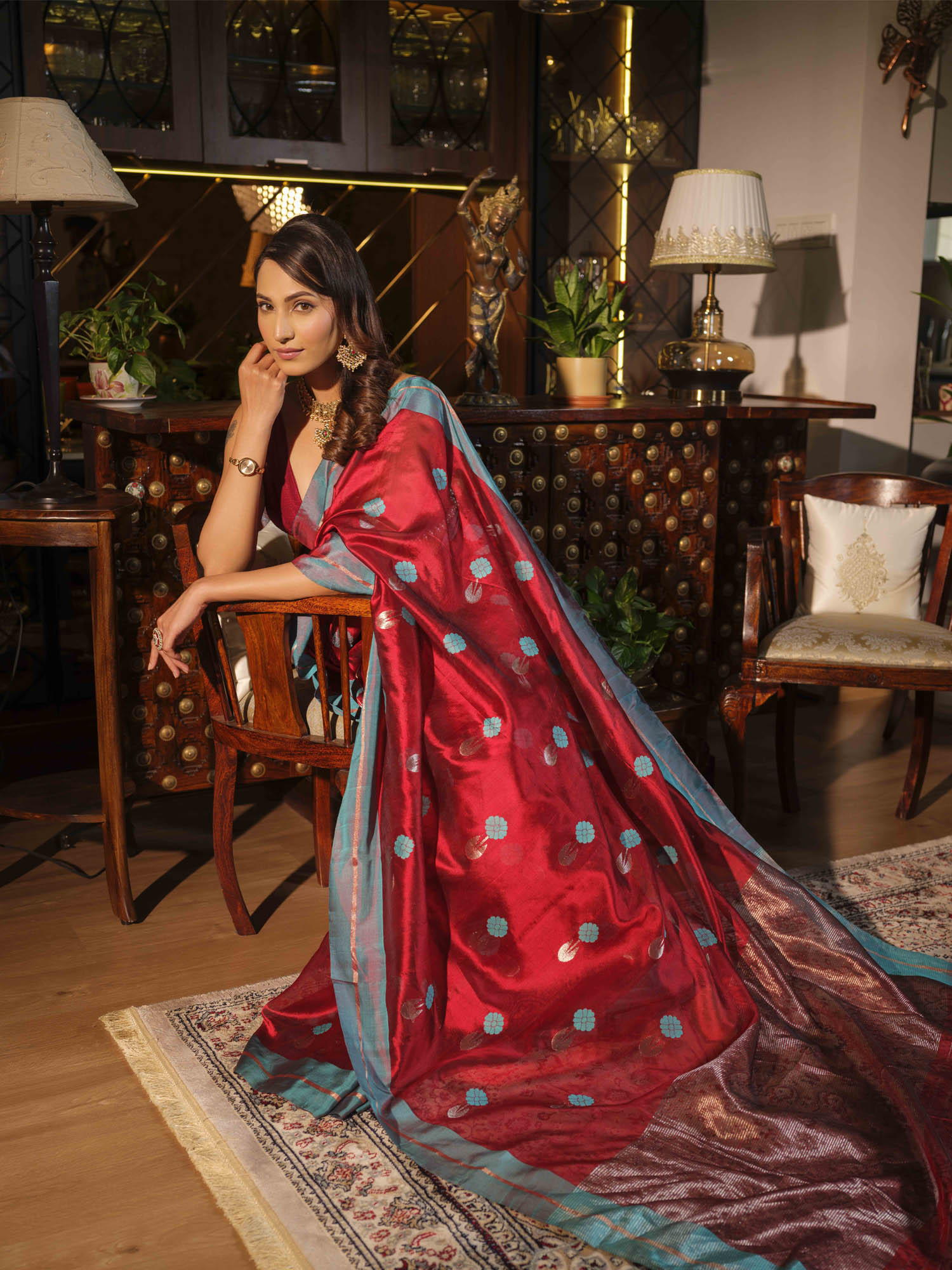
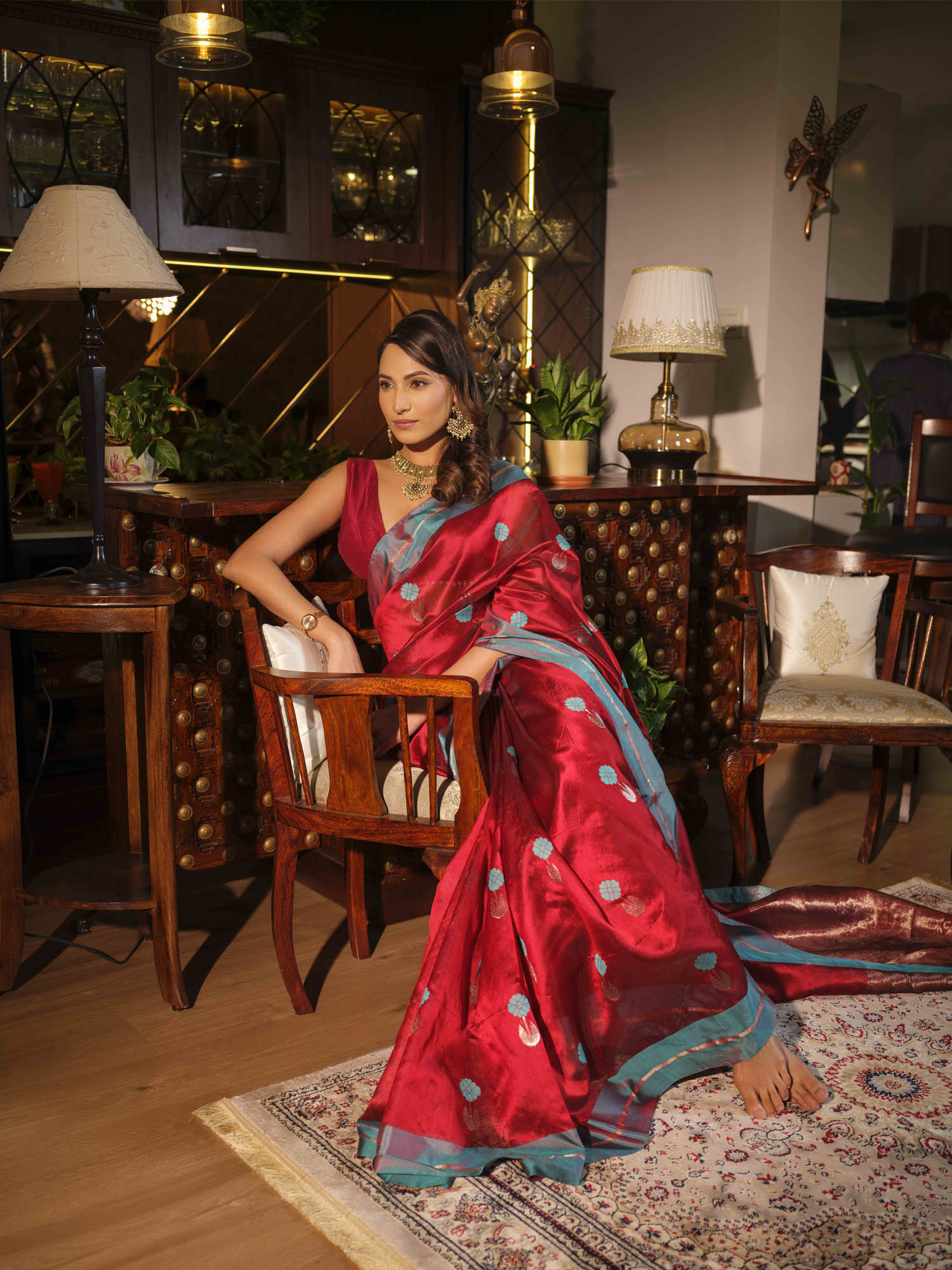
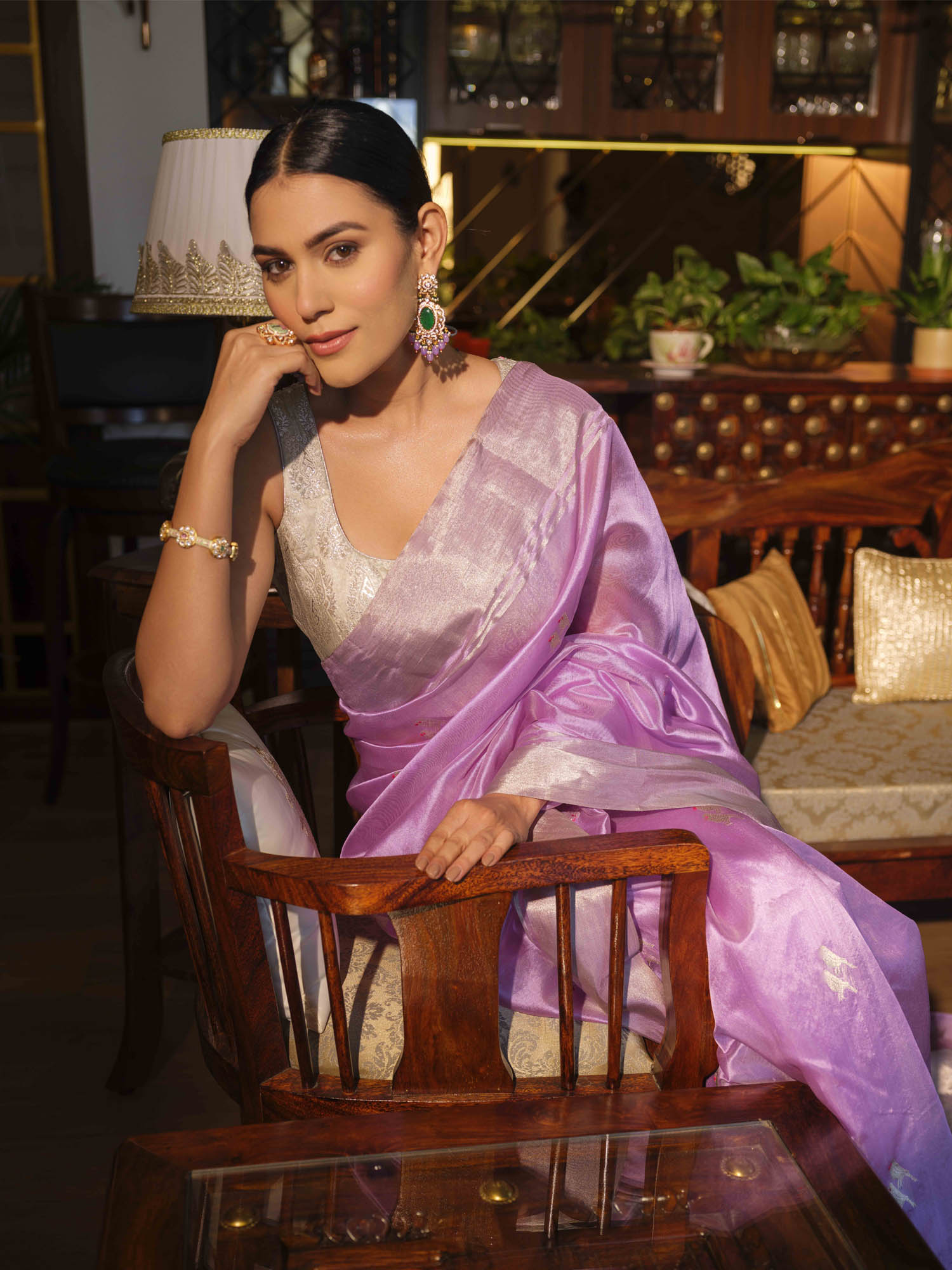
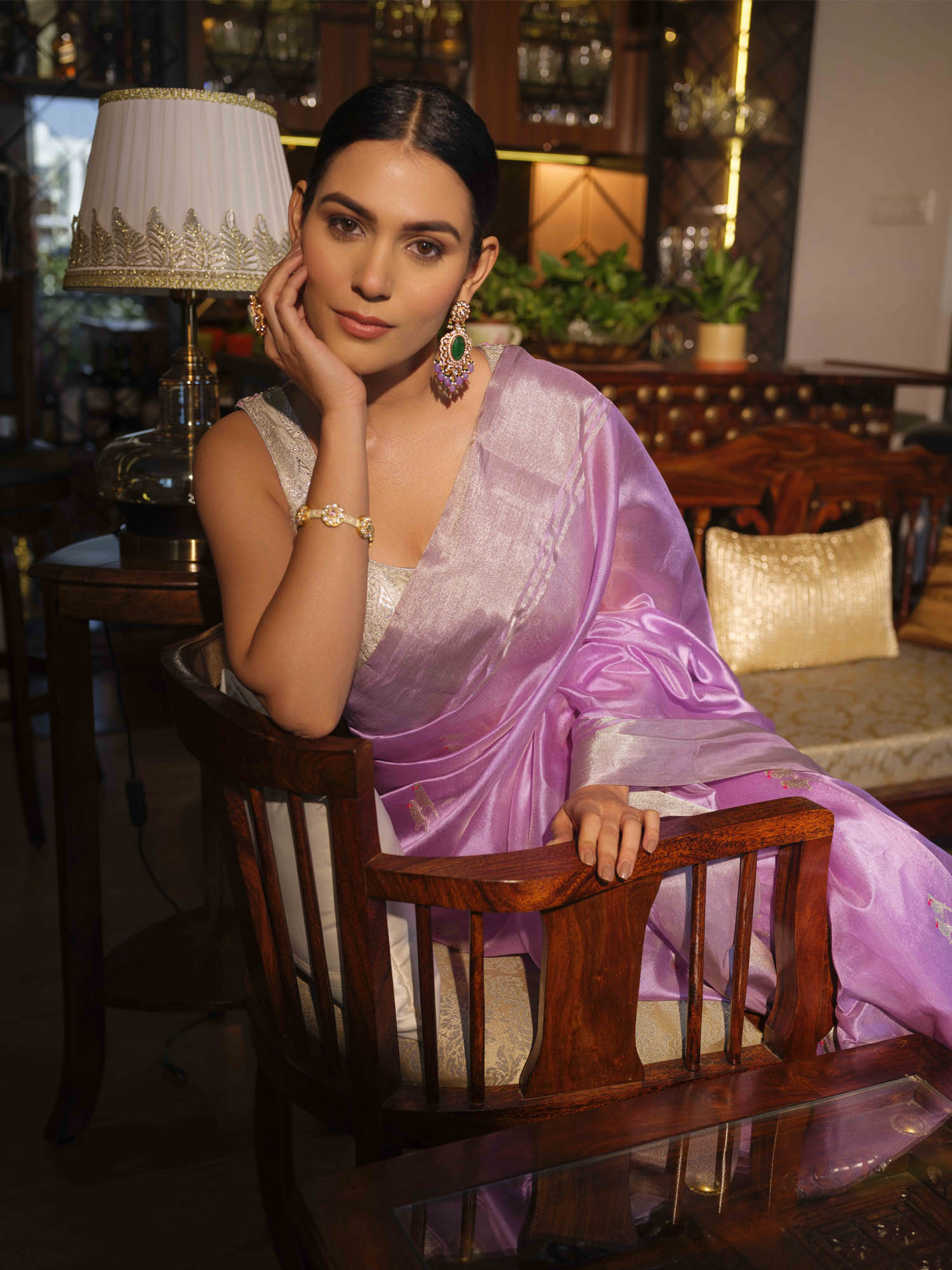


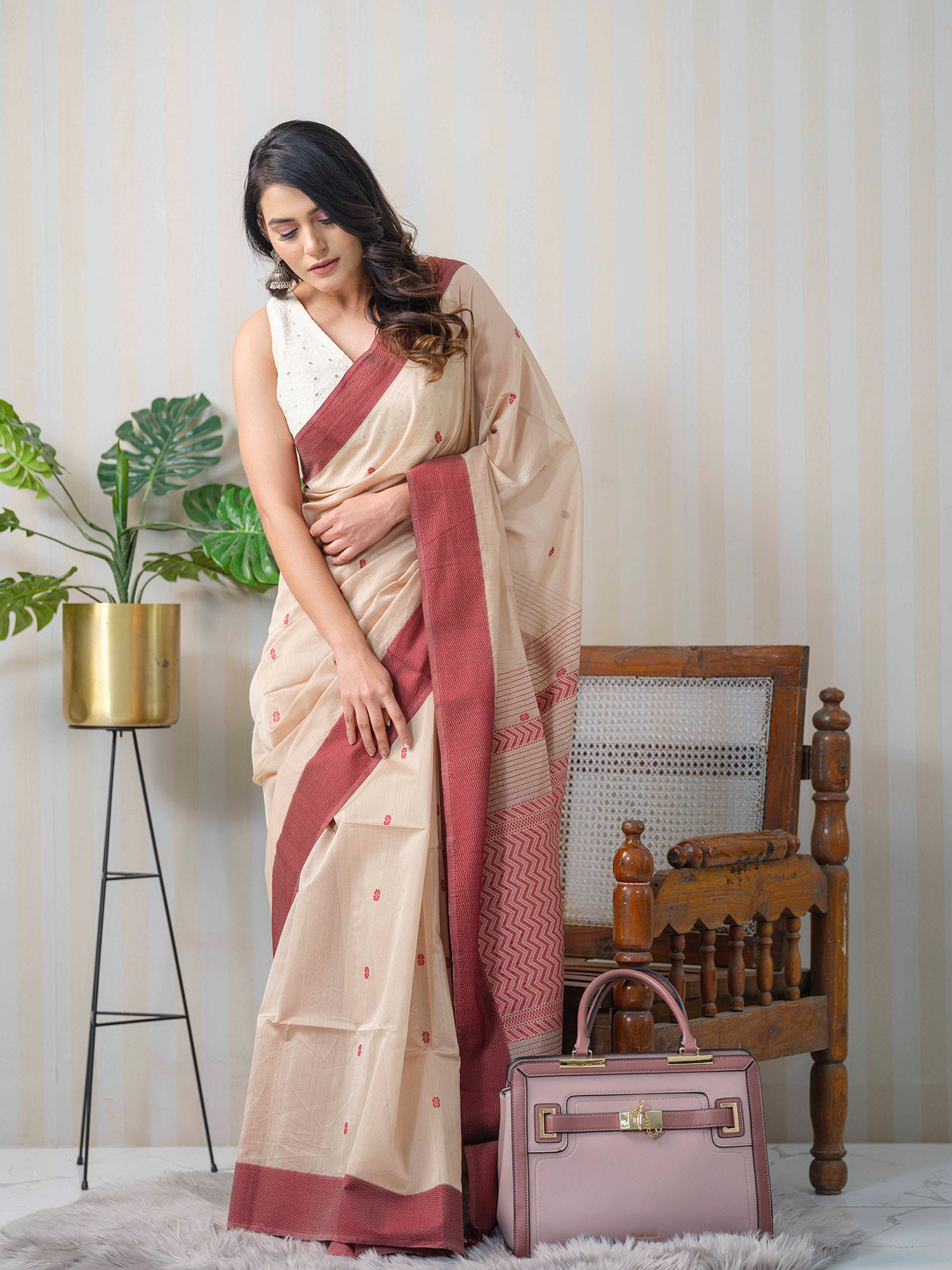
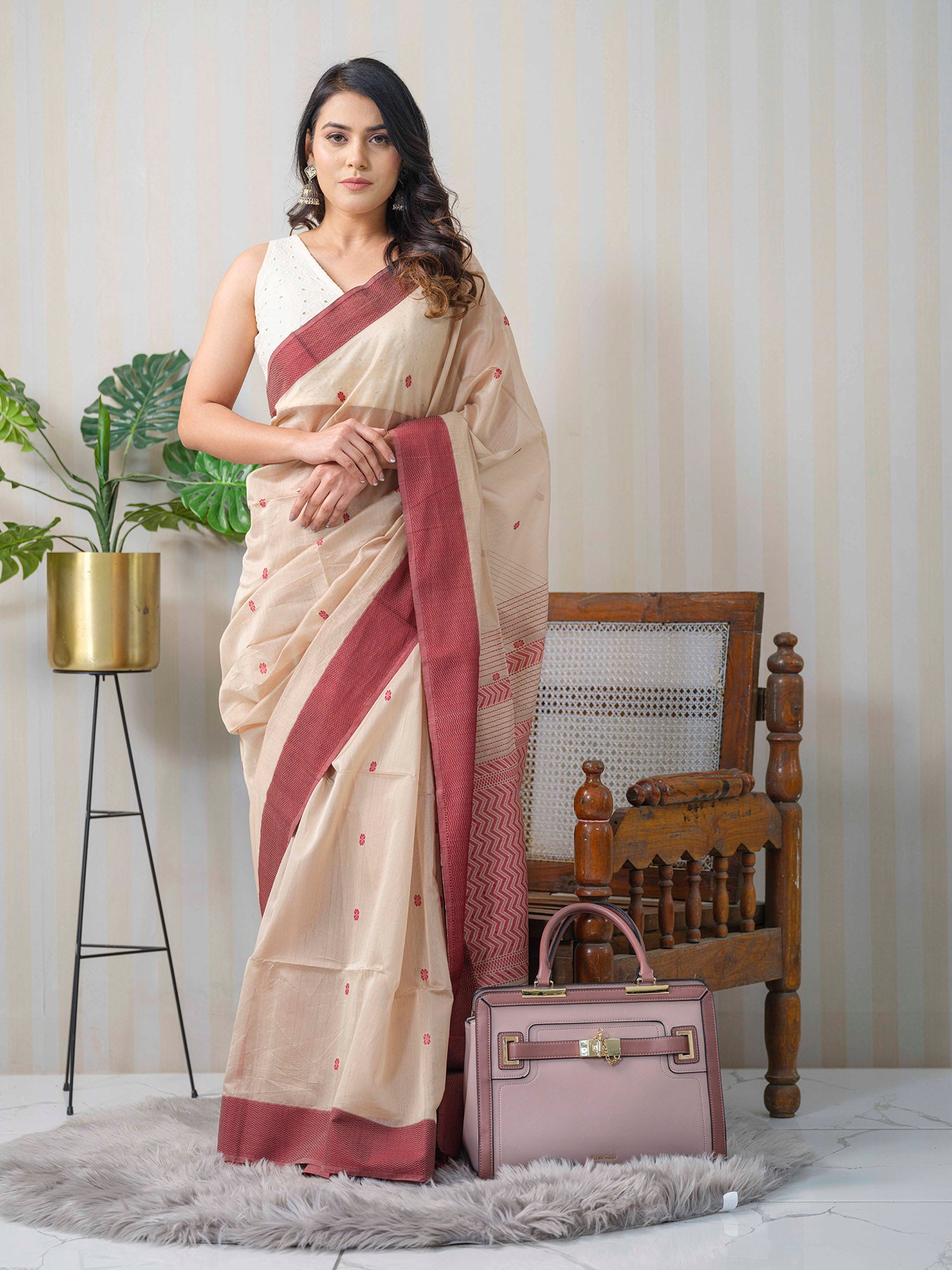
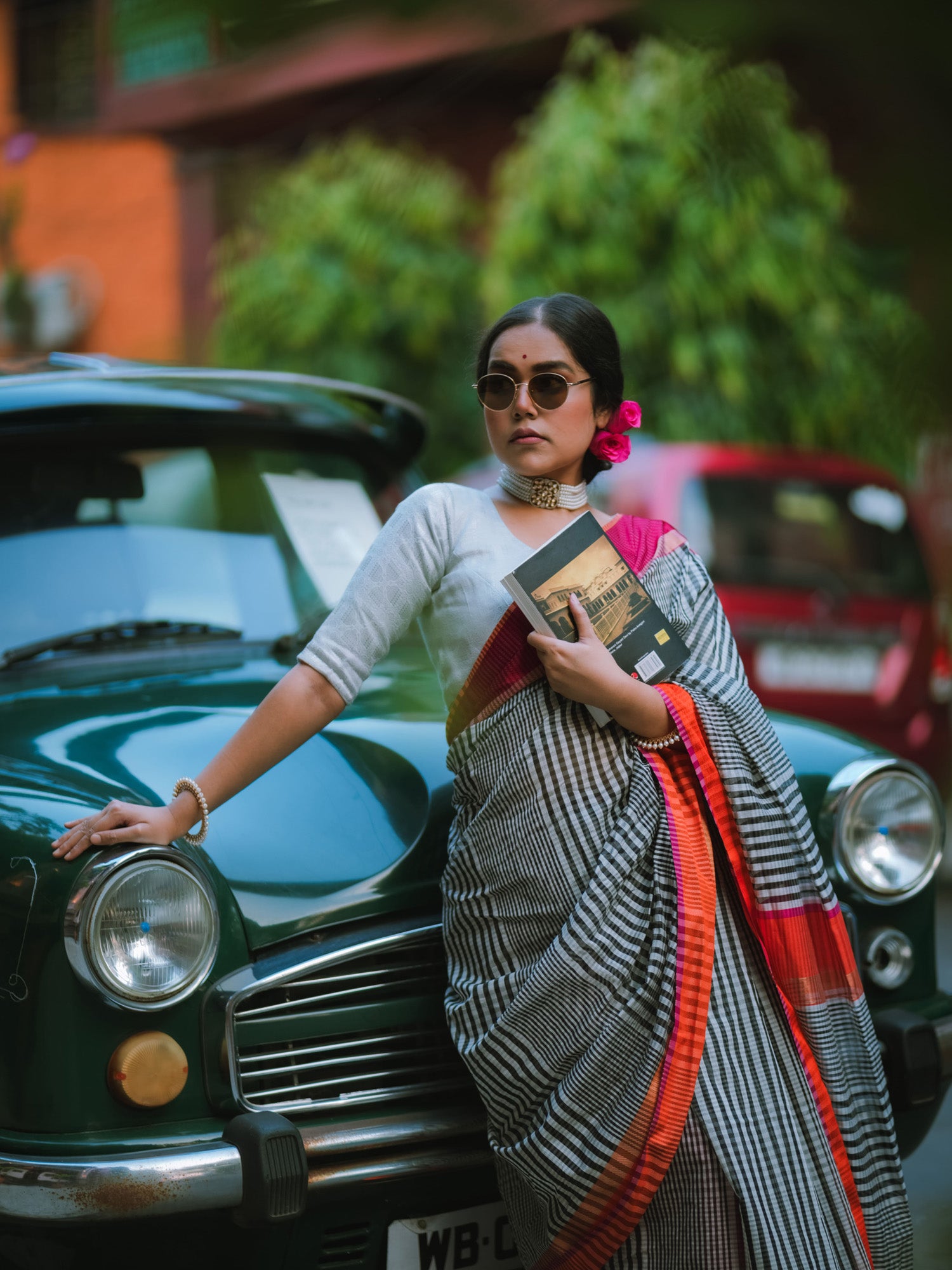
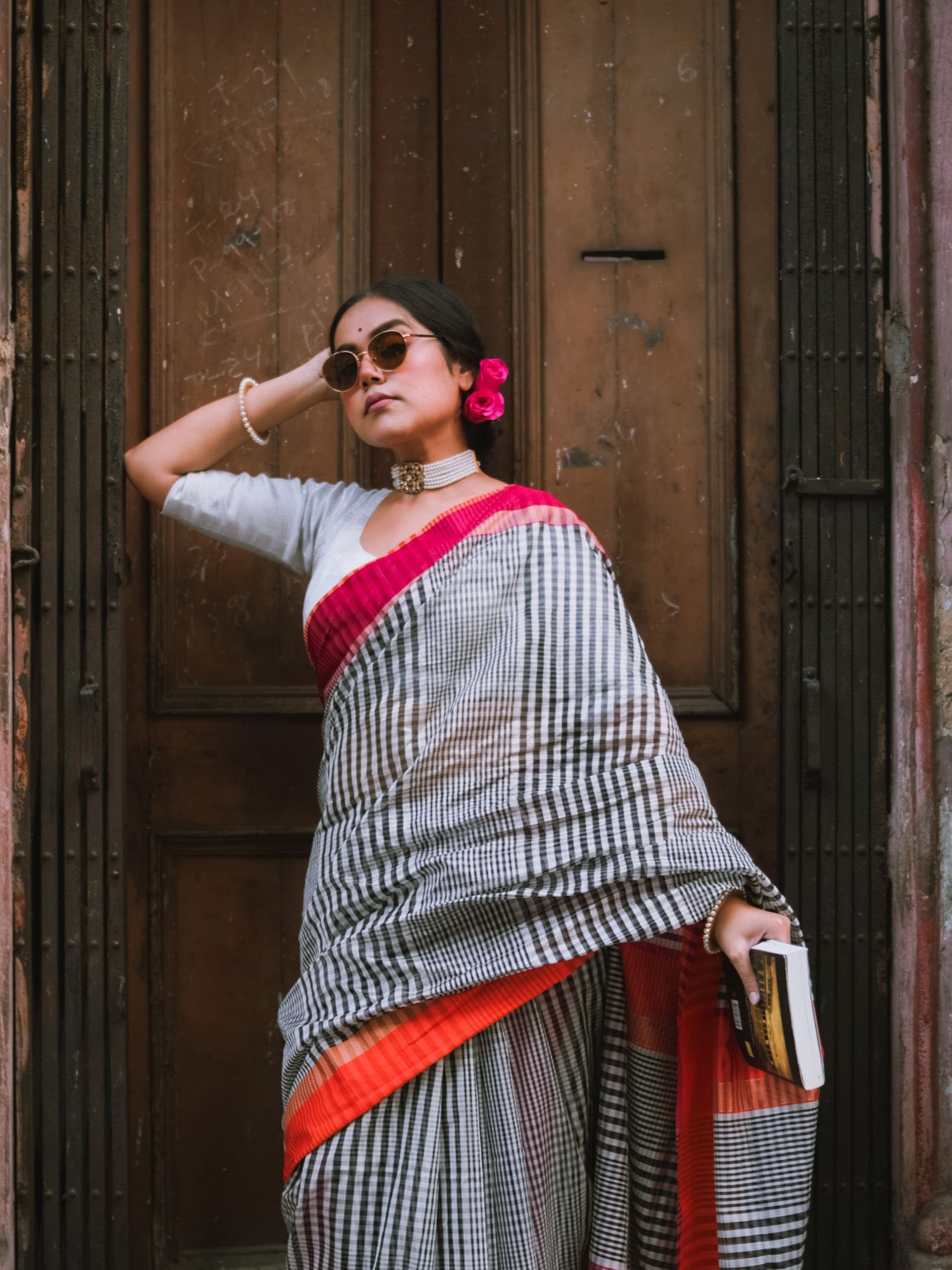


Every hand painted floral saree begins long before the first brushstroke touches the fabric. It starts with an idea a flower noticed during a quiet morning, a colour inspired by the changing seasons, or a memory waiting to be preserved through craft. At Mrida, this journey unfolds slowly, where traditional handloom weaving and hand painting come together to create sarees that celebrate nature and craftsmanship.
Unlike machine-made textiles, hand painted floral sarees are shaped by skilled artisans at every stage. From the first sketch to the final drape, each step reflects patience, precision, and years of inherited expertise. Through collections like From My Garden, Mrida transforms everyday blooms into wearable stories, creating handcrafted sarees that are as meaningful as they are beautiful. If you've ever wondered how a hand painted floral saree comes to life, this journey reveals the artistry behind every finished piece.
The Journey of a Hand Painted Floral Saree
Creating a hand painted floral saree is a collaborative process that brings together weavers, artists, and generations of craftsmanship. Every stage contributes to the beauty and individuality of the final piece.
Step 1: Finding Inspiration in Nature
Every design begins with observation.
At Mrida, inspiration comes from flowers that quietly bloom in everyday gardens the hibiscus catching the morning light, champa blossoms scattered across the courtyard, lotus flowers resting on still water, and bougainvillaea climbing old walls with effortless grace.
Rather than following trend forecasts, each design grows from these real moments, giving every saree a story before it reaches the artist's brush.
Step 2: Sketching the Floral Artwork
Before paint touches fabric, every motif begins on paper.
Artists carefully sketch flowers by studying their natural forms, paying attention to petals, leaves, movement, and balance. Instead of creating perfectly repeated patterns, they develop compositions that feel organic, allowing the artwork to resemble the effortless beauty of a blooming garden.
This thoughtful planning ensures every floral arrangement feels natural across the saree.
Step 3: Weaving the Handloom Fabric
While the artwork is being developed, skilled weavers begin creating the fabric.
For the From My Garden collection, Mrida chooses Mangalgiri Silk by Cotton, a traditional handwoven fabric from Andhra Pradesh known for its breathable comfort, subtle sheen, and graceful structure.
Because the fabric is woven by hand, every metre carries the character of the artisan who created it, providing the perfect foundation for detailed hand painting.
Step 4: Preparing the Saree for Hand Painting
Before painting begins, the woven saree is carefully prepared.
The fabric is inspected, finished, and readied to ensure the pigments settle beautifully into the weave. This preparation allows the artwork to retain clarity while preserving the softness and natural texture of the handloom fabric.
Only after this stage does the painting begin.
Step 5: Painting Every Flower by Hand
This is where the saree truly comes to life.
Using brushes and carefully selected pigments, artisans paint every flower individually. There are no digital prints or automated repetitions each petal, leaf, and stem is created by hand.
Small variations in brushwork are not flaws but signs of authenticity, making every saree one of a kind.
Step 6: Finishing and Quality Checking
Once the painting is complete, every saree undergoes careful inspection.
The artwork, colours, fabric, and finishing are checked to ensure the saree meets the highest standards before it becomes part of the collection.
Only then is it ready to be worn and cherished.
Why Hand Painted Floral Sarees Take Time
Creating a hand painted floral saree cannot be rushed.
The weaving itself takes time. The artwork requires careful planning. Every brushstroke demands patience and precision. Unlike machine production, each stage depends on the skill and attention of the artisan.
This slower process is exactly what gives handcrafted sarees their individuality and lasting value.
As more consumers embrace slow fashion and handcrafted textiles, artisan-made clothing is becoming increasingly valued for its quality, sustainability, and individuality. Hand Painted Floral Sarees reflect this growing appreciation for authentic craftsmanship, offering an alternative to mass-produced fashion while preserving India's rich handloom traditions.
Hand Painted Floral Sarees vs Printed Floral Sarees
Hand Painted Floral Sarees |
Printed Floral Sarees |
|---|---|
| Every saree is individually painted and unique | Identical designs are reproduced repeatedly |
| Painted by skilled artisans | Machine printed using automated processes |
| Handcrafted with attention to every detail | Mass produced for commercial production |
| Every piece has its own artistic character | Every piece looks virtually identical |
| Crafted on handwoven Mangalgiri Silk by Cotton | Often produced on machine-made fabrics |
| Timeless and heirloom-worthy | Trend-driven and fashion-oriented |
| Supports artisan communities | Industrial manufacturing |
| Sustainable craftsmanship | Large-scale production |
Although both styles celebrate floral beauty, a Hand Painted Floral Saree offers far more than visual appeal. Every saree reflects the patience of handloom weaving and the artistry of individual brushstrokes, making each piece truly one of a kind. For women who appreciate authenticity, craftsmanship, and timeless elegance, artisan-made Hand Painted Floral Sarees offer lasting value that extends far beyond seasonal fashion trends.

Why Handcrafted Sarees Continue to Matter
In an age of fast fashion, handcrafted textiles remind us that some things are worth waiting for.
Every hand painted floral saree supports traditional weaving communities, celebrates artisan skills, and preserves techniques that have been passed down through generations.
Choosing handcrafted pieces is not simply about owning something beautiful it's about appreciating the people and the stories behind every creation.
Discover Mrida's From My Garden Collection
The journey from sketch to finished saree comes alive in Mrida's From My Garden collection.
Inspired by everyday blooms and handcrafted on Mangalgiri Silk by Cotton, every saree reflects the meeting of two timeless crafts handloom weaving and hand painting.
Why Every Hand Painted Floral Saree Is Worth the Time
Final Thoughts
A hand painted floral saree is more than the finished artwork you see. It is the result of countless thoughtful decisions, skilled hands, and hours of patient craftsmanship from the first sketch to the final brushstroke.
At Mrida, every saree in the From My Garden collection celebrates this journey, honouring both the weavers who create the fabric and the artists who bring it to life through hand painting.
Every Hand Painted Floral Saree represents the collaboration of skilled weavers and artists, transforming inspiration from nature into a timeless piece of wearable art that can be cherished for generations.
Frequently Asked Questions (FAQs)
1. How are hand painted floral sarees made?
Hand painted floral sarees are created through a step-by-step process that includes designing the artwork, weaving the fabric, preparing the saree, hand painting each motif, and carefully finishing every piece.
2. What is the first step in making a hand painted saree?
The process begins with inspiration and sketching. Artists study flowers and create hand-drawn compositions before any painting begins.
3. Which fabric does Mrida use for hand painted floral sarees?
Mrida's From My Garden collection is crafted on Mangalgiri Silk by Cotton, a traditional handwoven fabric from Andhra Pradesh.
4. Why is Mangalgiri Silk by Cotton suitable for hand painting?
Its breathable weave, subtle sheen, and smooth texture allow pigments to settle naturally while beautifully showcasing the artwork.
5. Are all hand painted floral sarees unique?
Yes. Since every flower is painted by hand, no two sarees are exactly alike.
6. How long does it take to make a hand painted floral saree?
The time depends on the complexity of the artwork and weaving process, as every stage is completed by skilled artisans.
7. Are hand painted sarees better than printed sarees?
Hand painted sarees offer greater individuality, artisan craftsmanship, and uniqueness, while printed sarees are mass-produced using identical designs.
8. Do artisans sketch the designs before painting?
Yes. Every floral composition is carefully sketched before the painting process begins.
9. What makes handcrafted sarees valuable?
Their value comes from skilled craftsmanship, time-intensive processes, traditional weaving, and individually painted artwork.
10. Can I wear a hand painted floral saree for weddings?
Absolutely. They are suitable for weddings, festive occasions, cultural celebrations, and elegant daytime events.
11. How should I care for a hand painted saree?
Dry clean only and store it in a cool, dry place away from prolonged sunlight to preserve both the fabric and artwork.
12. Why are handcrafted sarees considered sustainable?
They support artisan communities, encourage mindful consumption, and prioritise quality over mass production.
13. What inspires the floral motifs in Mrida's collection?
The designs are inspired by real flowers found in everyday gardens, including hibiscus, lotus, champa, and bougainvillaea.
14. Can hand painted floral sarees become heirlooms?
Yes. With proper care, handcrafted sarees can be treasured and passed down through generations.
15. Where can I buy authentic hand painted floral sarees?
You can explore authentic Hand Painted Floral Sarees by Mrida in the From My Garden collection, handcrafted on premium Mangalgiri Silk by Cotton.
16. Why choose a hand painted floral saree from Mrida?
Every Mrida saree combines traditional handloom weaving with meticulous hand painting, creating timeless pieces inspired by nature and crafted by skilled artisans.
